What Causes an FBA Reimbursement?
What Causes an FBA Reimbursement?
Understanding Where Your Profit "Leaks" in the Amazon Ecosystem
Selling on Amazon through FBA allows you to scale rapidly by leveraging their massive logistics network. But when you process billions of units through highly automated fulfillment centers, errors are inevitable.
Many sellers operate under the assumption that if Amazon makes a mistake, Amazon automatically catches it and reimburses the account. This is rarely the case.
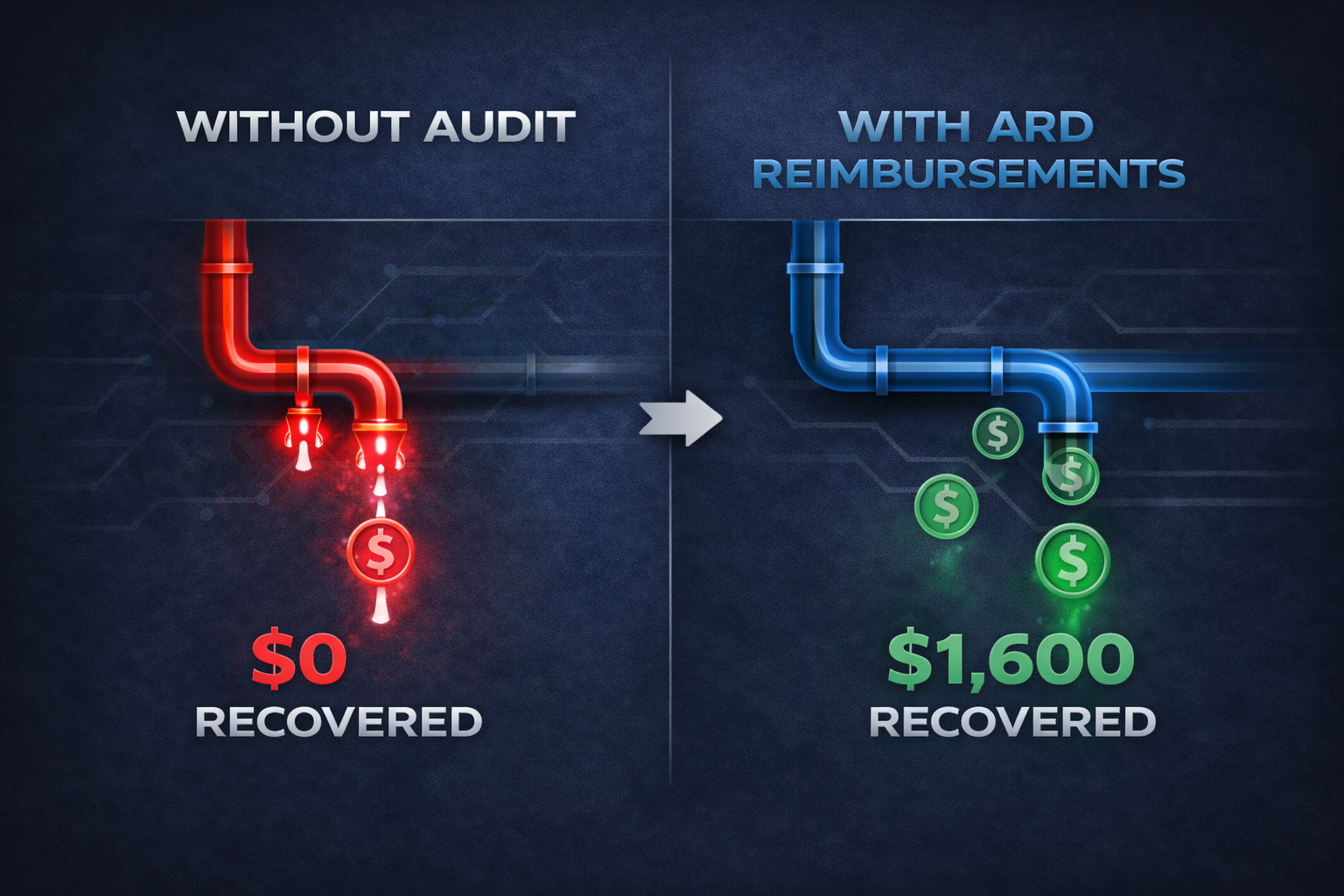
Amazon’s terms of service place the burden on you, the seller, to audit your account, identify discrepancies, and file claims within strict time windows. If you don't catch these errors, that money is lost forever.
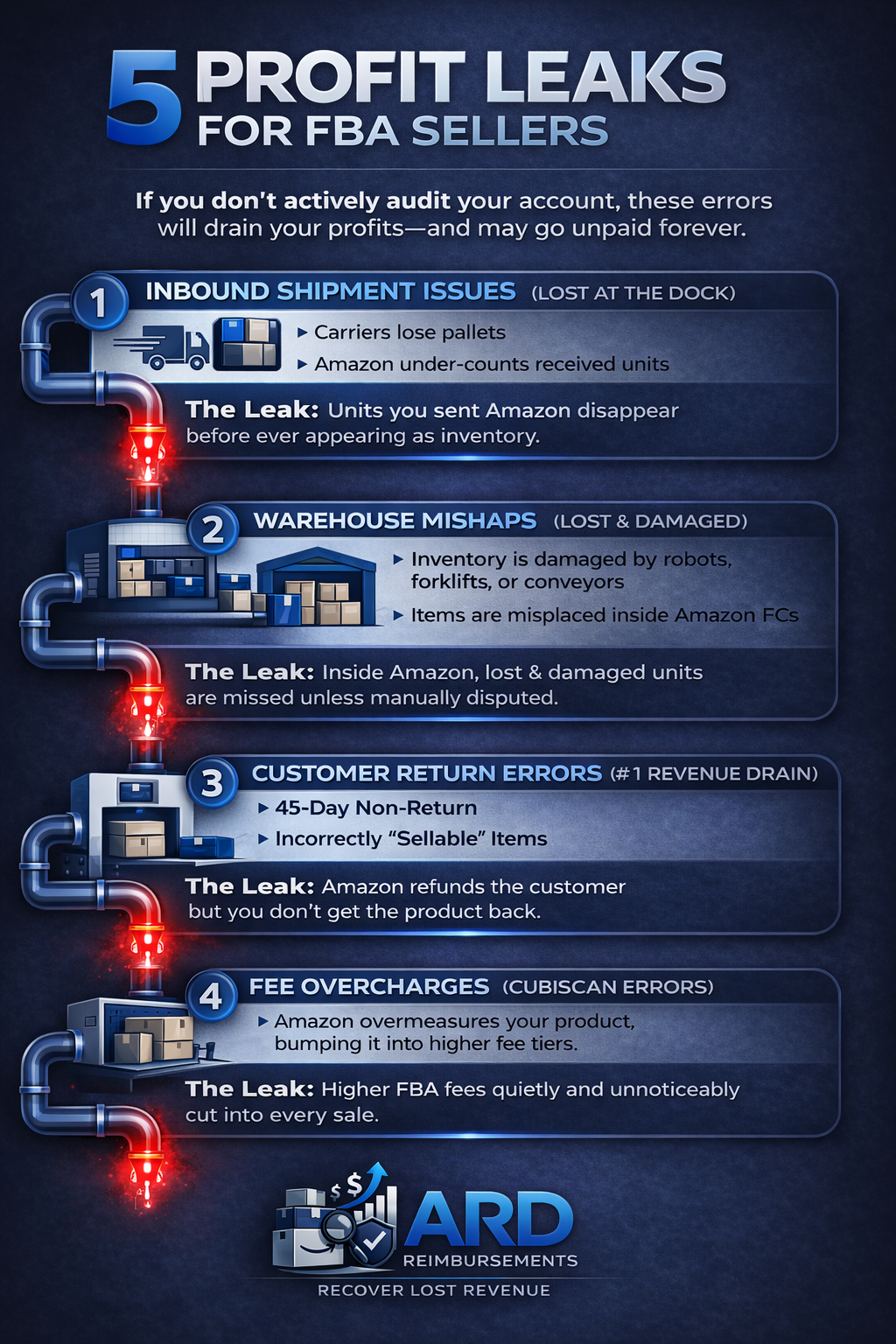
We call these "profit leakage points." Below are the five most common categories where Amazon likely owes you money right now.
1. Inbound Shipment Issues ("Lost at the Dock")
When you send inventory to Amazon, you expect the unit count you shipped to match the unit count received. Frequently, it doesn't.
Carriers may lose pallets, or Amazon fulfillment centers (FCs) may receive a shipment of 500 units but only scan in 480. Those missing 20 units often remain in limbo - not available for sale, but not officially "lost" by Amazon's automated systems until a specific reconciliation date passes.
The Leak: You paid for the inventory and the shipping, but the stock vanished before it ever hit the virtual shelf.
2. Warehouse Mishaps (Lost & Damaged)
Once your inventory is properly received, it enters the massive, complex machinery of an Amazon FC. Things go wrong internally every single day.
Damaged Inventory: Units are dropped by Kiva robots, crushed by forklifts, fall off conveyor belts, or are damaged by other heavy items stored nearby.
Lost Inventory: Items simply disappear during bin checks or get misplaced in the wrong part of the warehouse.
The Leak: Amazon should automatically reimburse you for "Warehouse Damaged" items, but they often miss them. If an item is misplaced for 30 days, you are owed the fair market value.
3. Customer Return Errors (The #1 Revenue Drain)
Customer returns are the single largest source of missed reimbursements for high-volume sellers. The process is ripe for errors that favor the customer at your expense.
When an FBA customer requests a return, Amazon immediately refunds them from your account. The customer then has 45 days to return the item to Amazon.
The 45-Day Failure: Often, the customer never returns the item. Amazon is supposed to recharge the customer and reimburse you after 45 days. Frequently, their system fails to trigger this step.
"Unsellable" Returns: A customer might return a used, broken, or completely different item. Amazon staff may incorrectly mark this damaged item as "sellable" and put it back into your inventory, leading to negative reviews from the next buyer.
The Leak: You are out the cash from the refund AND you don't have the physical product back.
4. Fee Overcharges (Cubiscan Errors)
This is a silent profit killer that doesn't involve lost inventory, but rather incorrect data.
Amazon uses "Cubiscan" machines to measure the weight and dimensions of your products to determine FBA pick-and-pack fees. These machines frequently mis-measure items, especially if packaging is slightly puffy or flexible.
If Amazon scans your product as being 0.5 inches larger on one side, it can bump you into a higher size tier. Suddenly, you are paying $0.50 to $2.00 more per unit shipped than you should be.
The Leak: You are overpaying fees on every single sale, silently eroding your margins over months.
5. Removal Order Failures
When you need to recall inventory—perhaps for Q4 storage cleanup or to inspect returns—you create a Removal Order to have stock shipped back to your warehouse.
Unfortunately, removal orders are often treated with a lower priority by FC staff. Sellers frequently receive removal shipments that contain significantly fewer units than requested, or arrive in massive boxes with no dunnage, resulting in stock being destroyed during transit back to you.
The Leak: You paid to have your own stock returned, only to receive damaged goods that you can no longer liquidate or refurbish.